

Article republished from the Louisiana Illuminator
by Wesley Muller, Louisiana Illuminator
September 12, 2024
Thunder will rumble, winds will howl, storm sirens will wail, and emergency alerts will squawk.
So many of the warning signs of severe weather are audible, making tornados and hurricanes a dangerous time for deaf people.
When Hurricane Francine began as a tropical disturbance in the Gulf of Mexico last weekend, two women — Debbie Barefield of Savannah, Georgia, and Rebecca Gemil of Austin, Texas — went into action, posting video after video for the Deaf Hurricane Information Group on Facebook.
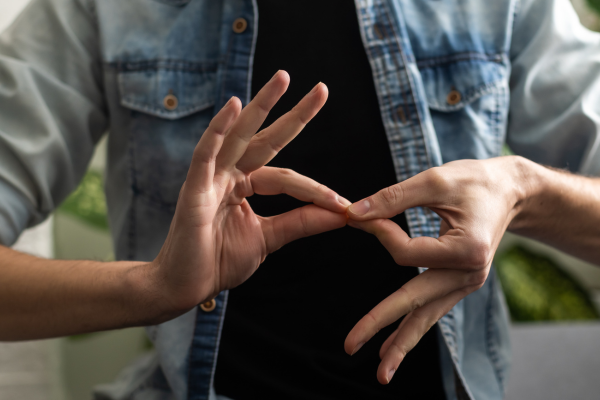
In the videos, they aggregated storm tracking from the National Hurricane Center, alerts from the National Weather Service, safety tips from authorities and weather stories from local Louisiana news sites, interpreting every major report into American Sign Language.
Many in the deaf community cannot read English text and only understand ASL, Barefield said, which is why their video posts are so critical.
The women have continued the work, sometimes posting dozens of times per day and late into the night, and plan to keep going until Francine, which made landfall Wednesday in South Louisiana as a category 1, no longer threatens the deaf and hearing impaired community.
Barefield, a professional interpreter who teaches ASL, and Gemil, who works at an animal shelter, were among seven women across the southeastern states who founded the group in 2017 ahead of Hurricane Harvey, which struck southeastern Texas as a Category 4 storm, killing hundreds and inflicting over $125 billion in damage.
In an interview Wednesday over Facebook Messenger, Barefield said the Deaf Hurricane Information Group was able to summon rescuers to save a deaf couple in Texas trapped in their mobile home by Harvey’s floodwaters.
“Deaf people are the last to receive news,” Barefield said.
Closed captioning services can be very inaccurate and unreliable, and many deaf people don’t have the luxury of being able to just pick up a phone and call 911 when situations turn bad, she said. For emergency services, the deaf use a video relay service that interprets their emergency requests to a 911 dispatch center, which often causes a delay in response times.
In recent years, state and local governments have done a better job of having ASL interpreters at emergency press briefings, storm shelters and among first responders. But it wasn’t always that way, according to Barefield.
The hearing community often doesn’t think of the needs of the deaf unless they know a deaf person, she added.
After a tornado smashed through Adairsville, Georgia, in January 2013, emergency responders left behind a deaf woman and her two children. The crews went knocking on doors at the scene. The deaf woman didn’t respond, so they painted a red “X” on her door and moved on.
It wasn’t until ASL interpreters briefed rescue workers that just knocking on doors searching for survivors was not enough. Crews went back through the impact zone and found the woman and her two children.
The goal of the Deaf Hurricane Facebook Group is to prevent similar situations.
Gemil pointed out that New Orleans has a similar group, ASL Emergency Alerts – Greater New Orleans. City officials created it just this year around the start of hurricane season, though it is only for emergency alerts and doesn’t serve as a liaison between first responders and deaf individuals the way the Deaf Hurricane Information Group does.
Since Hurricane Harvey, five of the group’s original founders no longer manage the group. They were all volunteers and didn’t have the resources to continue such a time-consuming job, Barefield said.
According to a 2019 study published in Social Science and Medicine, disabled people are particularly vulnerable during and after natural disasters. They are more likely to lose their homes, suffer property damage, die in disasters, get separated from family members, be ignored by relief volunteers in shelters, and suffer injuries or health-related complications, the study found.
Nearly 19% of Louisiana’s adult population is either deaf or hearing impaired, according to statistics from the U.S. Centers for Disease Control.
“It’s 5:00 AM on Sept. 12th,” Barefield wrote in her latest post on the group’s page. “How is everyone? Need anything? Let us know. I had little sleep in the last two days and fell asleep in my chair. Just woke up. Please let us know for anything.”
At around 8 a.m., Gemil posted that Francine had downgraded to a tropical depression.
“Thank u [sic] for the information,” one of the group’s followers replied.
