
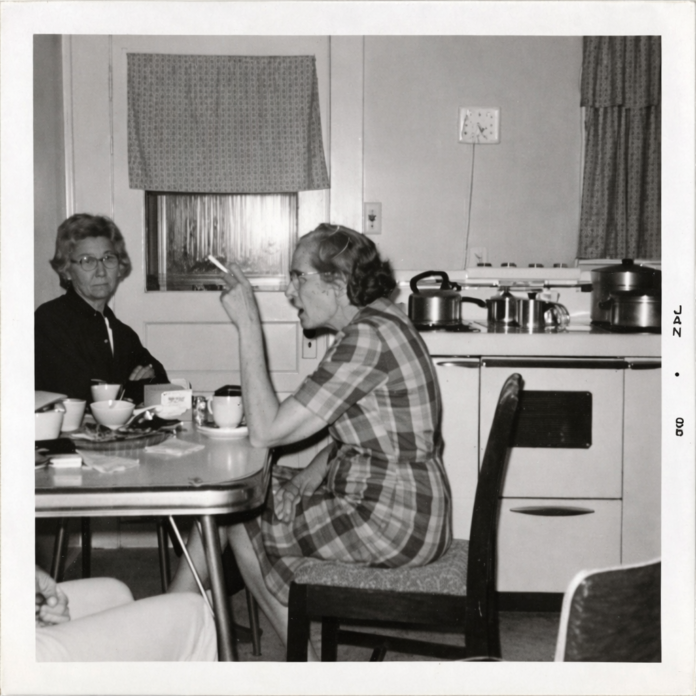

My parents were both Louisiana Cajuns, and morning coffee was a family ritual. Mother usually prepared it, but Dad frequently made coffee, too. Good coffee was not just a woman’s job. Coffee was brewed strong in a drip coffee pot. Older Cajun family members made coffee in an enamelware pot that had a little basket for coffee grounds in the top. The person brewing coffee had to slowly pour boiling water over the grounds. I do not remember these pots, but my older brother, John, reminisced about watching Grandpa Benoit make coffee. The family liked to say that Grandpa’s coffee was thick enough that the coffee spoon would stand up in the cup. Mom and Dad had a more modern three-part pot called a drip-o-lator with a reservoir on top to hold the hot water and allow it to drip slowly over the coffee grounds in the middle section. There was never a percolator in our home. Mom said that perked coffee tasted boiled and bitter.
The coffee was very strong, but it was served in small amounts in china cups and saucers, not mugs. We were careful to pour the coffee to a level that would allow the coffee drinker to add cream and sugar. Slowly and carefully stirring the coffee to dissolve the sugar was part of the ritual. The coffee drinker usually took an appreciative whiff to inhale the lovely coffee aroma before imbibing the first hot sip.
Coffee was sweetened with sugar and mixed with cream or evaporated milk. We used regular milk as a last resort since plain milk turned coffee into an unappetizing thin gray mixture. Cream provided a much richer texture and a lovely tan color. Canned evaporated milk was an acceptable substitute for cream and could be stored on the pantry shelves. Mom bought quarts of fresh milk for several years from Mr. Frederick, a family friend. Thick cream would rise to the top of the milk jar, and we scooped spoonfuls of that rich cream to add to our coffee. Coffee was always sweetened with sugar. There were never artificial sweeteners in the pantry. My father even gave up drinking coffee when he was diagnosed with diabetes and the dietician advised him not to use sugar. He would rather forego his morning coffee than drink it without sugar.
Young children were offered coffee milk or café au lait. This was not the same as the half-coffee, half-milk concoction served in restaurants. A child-safe drinking glass – usually a brightly colored aluminum or plastic Tupperware tumbler – was used. We poured a few tablespoons of hot coffee into the glass and stirred in a generous portion of sugar. Several ounces of cold milk completed the mixture. Somewhere along the way, children graduated from coffee milk to an adult cup of coffee. Younger brother, Tommy, thinks that he was about 12 years old when he traded his coffee milk for regular coffee. Dad sometimes brought a cup of sweet, creamy coffee to my room to wake me up for high school, so I must have switched to the adult version by then. When asked about her experience, younger sister, Margaret, smiled and said that her coffee even now is about half milk and sweetened with sugar.
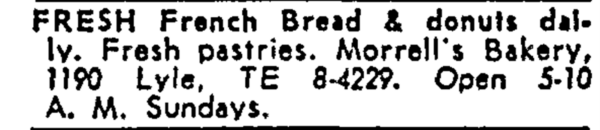
When I was very young, Catholics abstained from food and drink in the morning before receiving Communion. We attended an early Sunday Mass and often stopped at a bakery on the way home from church to purchase glazed donuts and French bread to have with our coffee to break our fast. Donut holes were always a fun treat for the children. Morrell’s Bakery was just a couple of blocks from the church, and they did a brisk business on Sunday morning.
After the Second Vatican Council in 1962, we were only required to fast for an hour before receiving Communion. That hardly seemed like fasting at all since Sunday Mass lasted almost an hour and Communion came near the end. After Vatican II, some Sunday mornings would find the whole family sipping coffee or coffee milk and reading the newspaper together before leaving for church. Dad frowned over the front page. Mom liked the Lifestyle section. Children enjoyed the colorful Sunday funny pages. We discussed the advice from the Dear Abby column.
Sometimes coffee was served in the afternoon. Mom and Dad might sit down for a cup together after a day of chores. Children, however, were not allowed to indulge in afternoon coffee. Visitors were always offered a cup of coffee. Close family members sometimes sat around the kitchen table. A larger group or older relatives who needed a more comfortable seat would be seated in the living room. Older children were often sent to make the coffee. We brewed the coffee and prepared a tray with cups, spoons, sugar, and cream to serve to the guests in the living room. I do not remember that coffee was ever served as a regular part of or as an ending to a meal.
If the guests were expected, Mother might have baked a spice cake or oatmeal cookies to serve with the coffee. A special treat would be little baked sweet dough pies filled with Mom’s homemade fig preserves. Oatmeal cookies were made using the recipe on the Old Fashioned Quaker Oats box. The spice cake recipe was stored in my mother’s memory. Sweet dough pies, likewise, were an old Louisiana recipe made from memory.
Guests often arrived unannounced, though. When I was a child, Sunday was observed as a day of rest. Most stores were not open. Many people did not work on Sunday. Housecleaning, yard work, and laundry were tackled on Saturdays. Sunday meant church, dinner with the family, and a relaxing afternoon. Sometimes the family went for a Sunday afternoon drive. Those drives might end up at a nearby relative’s home. It was not unusual for aunts, uncles, and cousins to just show up on Sunday afternoons. We put the water on to boil when we recognized the car in the driveway.
When visitors shared coffee, cigarette smoking was often involved. Many smokers seemed to need a cigarette with coffee, and it was not considered rude or dangerous to light up a cigarette in someone’s home. Coffee drinkers might be enveloped in a cloud of smoke. My parents did not smoke regularly, but Mom might accept a cigarette offered by a visitor. Dad sometimes smoked a pipe.
Our coffee rituals have changed with changing lifestyles and technology. The concept of Sunday as a day of rest faded away many years ago. State blue laws, which restricted store and business openings on Sundays, were gradually repealed. Today, people work and shop on Sundays and relatives no longer drop in on Sunday afternoons. My husband and I brew individual cups of coffee using coffee pods, take our coffee cups to our personal desks, and read our newspaper online. We keep up with family news by email or text messages.
Today, we can line up in our cars at drive-through windows where a myriad of coffee menu options is available. Latte, cappuccino, espresso, or Americano can be had. Choose light, medium, or dark roast. Have cold or hot blended drinks flavored with pumpkin spice, peppermint, cinnamon, or caramel syrups. Sweeten with white sugar, raw sugar, honey, or a variety of artificial sweeteners. Add whole milk, skim milk, oat milk, or almond milk. Opt for a topping of whipped cream or an infusion of foamy milk. These elaborate customized coffee drinks may be larger, sweeter, more varied, and higher in caffeine, but they are usually consumed alone in the car while navigating through city traffic.
Our old coffee rituals were intertwined with conversation and exchanging family news. Sharing a cup of coffee with family or friends was a time to relax. We left our chores and focused on our companions. Drinking a cup of coffee together was more about the interactions than the drink. Such face-to-face connection provided more nuanced conversation. We gained more information through facial expressions and gestures than we can capture in the brief text messages or Facebook posts we often use for family news now.
