
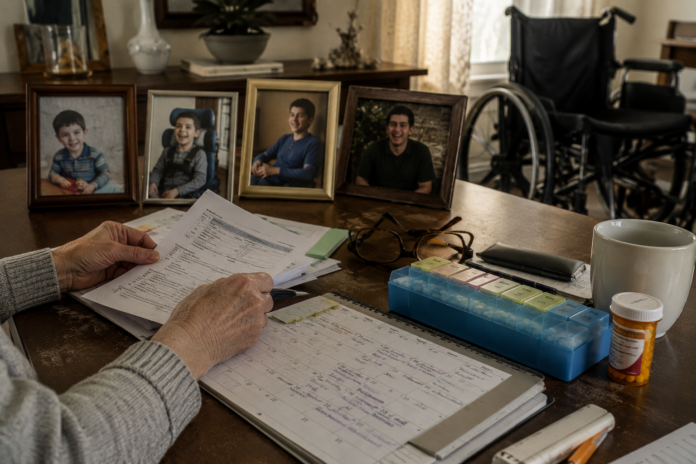

For many Louisianans, terms such as Medicaid, home and community-based services, waivers, and residential care may not be part of everyday conversation.
For families of individuals with significant developmental disabilities, however, those systems often shape daily life over many years—and in some cases, over a lifetime.
One issue that receives less public attention is what happens when individuals with significant developmental disabilities require lifelong support, and the parents or caregivers who have helped navigate those systems begin to age.
Understanding the System
Developmental disability services in Louisiana are supported through a combination of public programs, healthcare systems, educational services, residential supports, and community-based resources.
For many individuals with developmental disabilities, Medicaid serves as more than healthcare coverage. It is often the primary mechanism through which long-term supports are accessed, including home and community-based services (HCBS), residential services, and other long-term care options.
Understanding Medicaid’s role is important in conversations about developmental disability services because it often forms the foundation of long-term support systems.
How Home and Community-Based Services Developed
Home and community-based services did not always exist in the way they are recognized today.
Historically, Medicaid funding for long-term care heavily favored institutional settings, often leaving families with limited alternatives when significant support needs existed.
National awareness of that issue increased in the early 1980s through the case of Katie Beckett, a child whose medical needs required extended hospitalization because public systems would fund institutional care but not equivalent care at home.
Her case helped shape broader conversations about disability policy and long-term care, contributing to the expansion of home and community-based service options.
That history helps explain why many disability services are structured as they are today.
No Single Care Model Fits Every Situation
Support needs vary widely among individuals with developmental disabilities.
Some individuals may be well served through home and community-based settings.
Others may require residential care or facility-based support depending on medical complexity, behavioral concerns, safety considerations, or family circumstances.
Questions about developmental disability services are not necessarily about choosing one model over another.
They often involve determining what combination of appropriate, quality services best meets the needs of the individual.
Quality care matters in every setting.
The Long-Term Family Role
Families often play a significant role in developmental disability support, even when formal services are in place.
That role may include navigating medical care, therapies, education systems, transportation, legal matters, public assistance programs, crisis situations, and long-term planning.
The level of family involvement varies depending on the individual’s needs, available supports, and family circumstances.
For some families, caregiving remains extensive throughout adulthood.
For others, formal support systems assume a larger share of day-to-day care.
Aging Caregivers and Long-Term Planning
Because many developmental disabilities involve lifelong support needs, aging caregivers can become part of the broader conversation.
As parents or other caregivers age, families may face questions about continuity of care, future planning, financial stability, and long-term support arrangements.
Siblings or extended family members may or may not be positioned to assume future responsibilities.
That raises broader public-interest questions:
How do long-term support systems remain stable over time?
How do families plan for changing circumstances?
How do individuals with significant support needs maintain continuity of care as life circumstances evolve?
While families in many caregiving situations may face similar questions, developmental disabilities often involve support needs that begin in childhood and continue throughout adulthood, creating uniquely long-term planning realities.
Communication, Oversight, and Vulnerability
For some individuals with developmental disabilities, communicating unmet needs, discomfort, neglect, or concerns may be difficult—or impossible.
That creates additional considerations related to oversight, accountability, and trust across care settings.
Those issues are not limited to one environment.
Questions about quality, safety, and monitoring may arise in home-based care, community-based programs, residential settings, or institutional environments.
Why Public Awareness Matters
Discussions about disability services often involve technical terms that can seem abstract to those outside the system.
But behind those terms are real decisions affecting housing, care, family roles, long-term planning, and quality of life.
As conversations continue in Louisiana about healthcare, caregiving, and disability services, understanding the structure and long-term realities of developmental disability support may help inform broader public awareness.
